2026-08-24 ·
What Influences Non Owner SR22 Insurance Rates in Denver
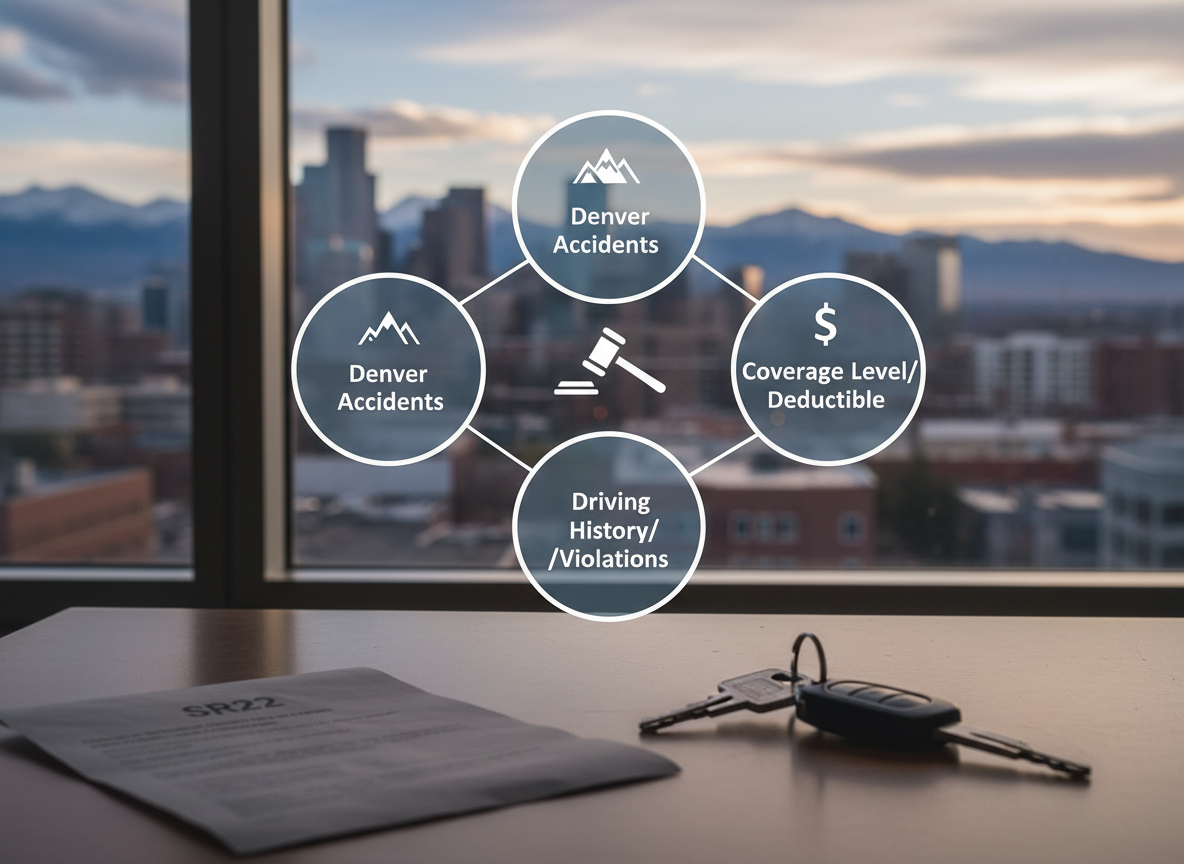
Non Owner SR22 Insurance rates in Denver are shaped most directly by a driver's violation history, the filing requirements from the Colorado DMV, and exposure levels tied to specific neighborhoods and weather patterns across Denver County. Drivers in Capitol Hill or RiNo often see different pricing than those in Washington Park because traffic density and parking realities change how often a non-owned vehicle gets used. Cold winters with snow on Mount Evans roads and frequent summer thunderstorms in Five Points further influence insurer calculations around accident likelihood.
Driving History and Filing Requirements
A driver's record forms the foundation for Non Owner SR22 Insurance pricing because each prior violation signals future risk to carriers. In Denver County, common triggers include DUI convictions or multiple speeding tickets that lead to license suspension, requiring the SR22 filing. The length of time the SR22 must remain active, typically three years, keeps rates elevated until the period ends. Nearby cities such as Aurora and Lakewood share similar DMV rules, yet urban density in LoDo or Baker can add variables when a driver borrows vehicles for commuting. SR22 Insurance filings must match exact court or DMV orders, and any lapse resets the clock and increases premiums.
Neighborhood and Location Factors
Where a driver resides inside Denver County directly affects Non Owner SR22 Insurance rates because insurers map claim frequency to specific streets and parking situations. Capitol Hill and Highland see higher rates due to narrow streets and heavy foot traffic that raise collision odds even for borrowed cars. In contrast, Stapleton or Montclair offer more residential layouts with lower reported incidents. Centennial and Lakewood residents who commute into Denver face blended rate structures that reflect both suburban and urban exposure. Auto Insurance policies layered with the SR22 requirement must account for these geographic differences when calculating non-owner liability limits.
Weather and Seasonal Driving Conditions
Denver's semi-arid climate with hot summers, cold winters, and afternoon thunderstorms creates predictable risk spikes that carriers build into Non Owner SR22 Insurance quotes. Winter ice on roads near City Park or Union Station increases slide-related claims, while summer storms in Cherry Creek can lead to hydroplaning incidents. Drivers who borrow vehicles during these periods face higher base rates because insurers review seasonal claim data for Denver County. Winter Driving Rules and Non Owner SR22 Insurance in Colorado outlines how these patterns intersect with filing obligations. Red Rocks Amphitheatre event traffic during storm season adds another layer of exposure for non-owners using borrowed cars.
Policy Structure and Usage Patterns
The way coverage is structured around non-owned vehicles also moves rates in Denver. Minimum liability limits required for the SR22 filing keep costs contained, yet adding higher limits for frequent borrowing in areas like RiNo or Baker raises premiums. Usage frequency matters: someone who occasionally drives a friend's car after a traffic stop in LoDo pays differently than a daily commuter. How Non Owner SR22 Insurance Applies After a Denver Traffic Stop explains timing and documentation steps that affect ongoing pricing. Colorado SR22 Insurance remains available Mon–Sun 24/7 to help drivers meet filing deadlines without coverage gaps that would otherwise inflate future quotes.